Ages 6–12 · Grades 1–6
Elementary Program
Where Curiosity Becomes a Way of Life
Elementary children don't just learn about the world — they explore it, question it, and begin to understand their place in it.

Schedules We Offer
Choose the Schedule That Works for Your Family
We offer flexible scheduling options to suit different family needs. All programs include optional Before Care where noted.
Elementary School Day (6–8 Years)
8:15 AM – 3:15 PM
$1,170/month
Elementary Full Day (6–8 Years)
7:00 AM – 6:00 PM
$1,520/month
Elementary Early Dropoff (optional)
7:00 AM – 8:15 AM
$170/month (if not on Full Day)
Elementary School Day (9–12 Years)
8:15 AM – 3:15 PM
$1,210/month
Elementary Full Day (9–12 Years)
7:00 AM – 6:00 PM
$1,560/month
Elementary Early Dropoff (optional)
7:00 AM – 8:15 AM
$170/month (if not on Full Day)
Scholarships may be available to help offset tuition costs.


The Reasoning Mind
At This Age, Children Are Ready to Think Big
Dr. Montessori described the 6–12 years as the period of the "reasoning mind." Children at this stage are no longer sensorial explorers — they are abstract thinkers, hungry to understand cause and effect, moral questions, and the story of human civilization.
Our Elementary curriculum reflects that. History, geography, science, mathematics, biology, language, art, music, and drama are taught not as separate subjects but as an integrated view of the world — helping children see the connections between things rather than treating knowledge as isolated facts.
Learning in Action
Independent, Collaborative, and Out in the World
In Elementary, students begin to ask the big questions.
Studies
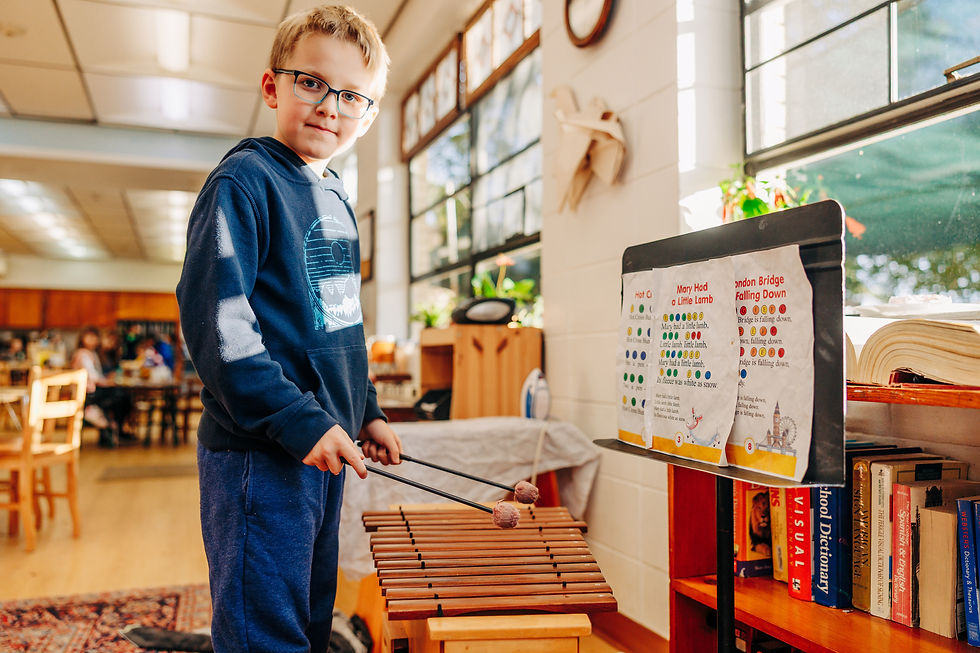
Materials and follow-up activities help the children explore topics in detail. These lead to independent studies in history, geography, biology and physical science. Their study begins with the vastness of the universe down to minute particles of the atom. Art, music and drama are integrated into the life of the class along with the physical activity.
Making Connections
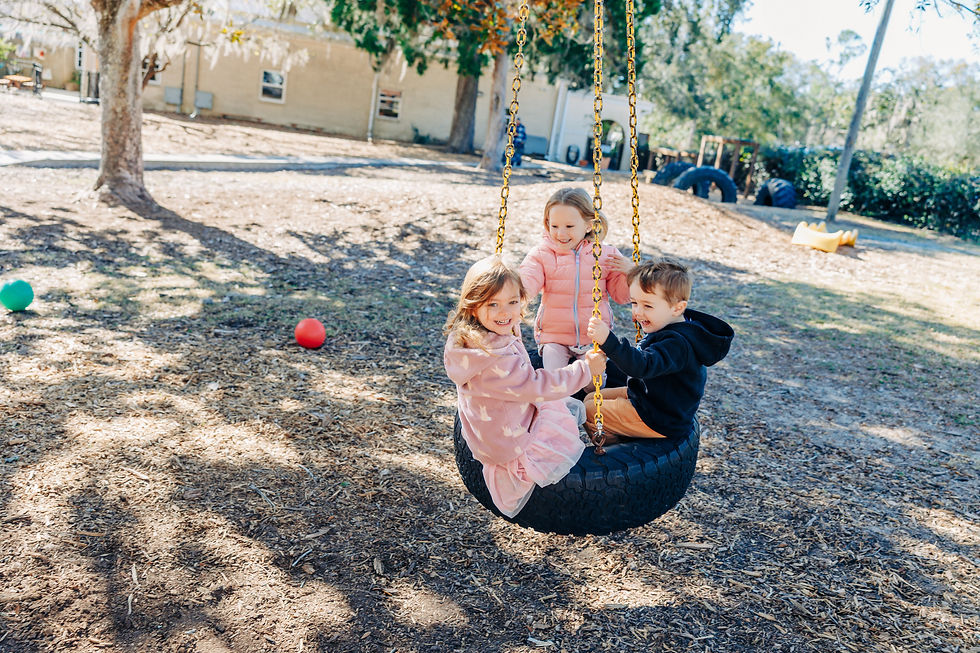
The children’s research projects are shared with their peers in written, oral and multimedia presentations. There is a variety of class trips or individual “going-outs” to help the children make connections from the curriculum to the community in which they live to the world beyond.
Formal Testing
In the Montessori Elementary Program formal testing occurs once a year. Children take the Iowa test which is a standardized test normed across the US. Results are used as objective indicators of what is observed by the teacher in the students daily work.

Self-Confidence
The goal of the Montessori Elementary Program is to help each child grow into a capable, confident, and independent learner. At this stage, children are naturally curious and eager to understand not just what something is, but why and how it works. The Montessori approach harnesses this drive by giving children increasing responsibility for directing their own learning. Instead of relying on external rewards or pressure, children learn to set goals, manage their time, and evaluate their progress, building habits of self-discipline and intrinsic motivation that serve them for life.
FAQs
Everything You Need to Know
How is learning assessed without traditional grades?
Teachers observe children daily and maintain detailed records of their progress. Once a year, children take the Iowa Test — a nationally normed standardized assessment — which provides an objective complement to teacher observation.
What are "going out" experiences?
Going out experiences are field trips or independent research excursions that connect classroom learning to the real world. They are an important part of the Elementary curriculum.
How does the multi-age classroom work at this level?
Children ages 6–12 share the Elementary environment across two three-year cycles. Older students take on leadership roles, while younger students benefit from peer modeling. Both benefit from these relationships.
Can my child join Elementary if they haven't been in Montessori before?
Yes. We assess each child individually and work with families to ensure a smooth transition into the Montessori environment.