Montessori Doesn't End at Elementary: Why It Matters Even More in Middle School

When many people hear the word Montessori, they picture young children carefully pouring water, working with wooden materials, or learning to read with sandpaper letters.
What surprises many families is that Montessori doesn't end after preschool—or even elementary school.
In fact, Maria Montessori believed that adolescence is one of the most important stages of human development. The middle school years are a time of enormous physical, emotional, social, and intellectual change. Rather than seeing those changes as challenges to manage, Montessori saw them as opportunities to help young people discover who they are and how they can contribute to the world.
A Different Kind of Learning for a Different Stage of Life
Between the ages of 12 and 15, students begin asking bigger questions.
Who am I?
What am I good at?
How does the world work?
Where do I fit?
A Montessori middle school is designed around those questions.
Rather than spending every day moving from one lecture to the next, students learn by investigating real problems, collaborating with peers, taking on meaningful responsibilities, and applying their knowledge in authentic ways.
The goal isn't simply to earn good grades. It's to develop capable, confident young adults who know how to think, solve problems, and continue learning long after they leave the classroom.
Learning That Connects to the Real World
Adolescents naturally want to understand why what they're learning matters.
Montessori honors that curiosity by connecting academics to real life.
A history lesson might become a debate about current events. A science unit may lead to designing and conducting experiments. Mathematics becomes a tool for solving practical challenges rather than simply completing worksheets.
When students see purpose in their work, motivation comes from within.
Independence with Responsibility
Middle school is a time when students crave more independence—but they're still learning how to manage it.
Montessori provides opportunities to practice that independence in meaningful ways.
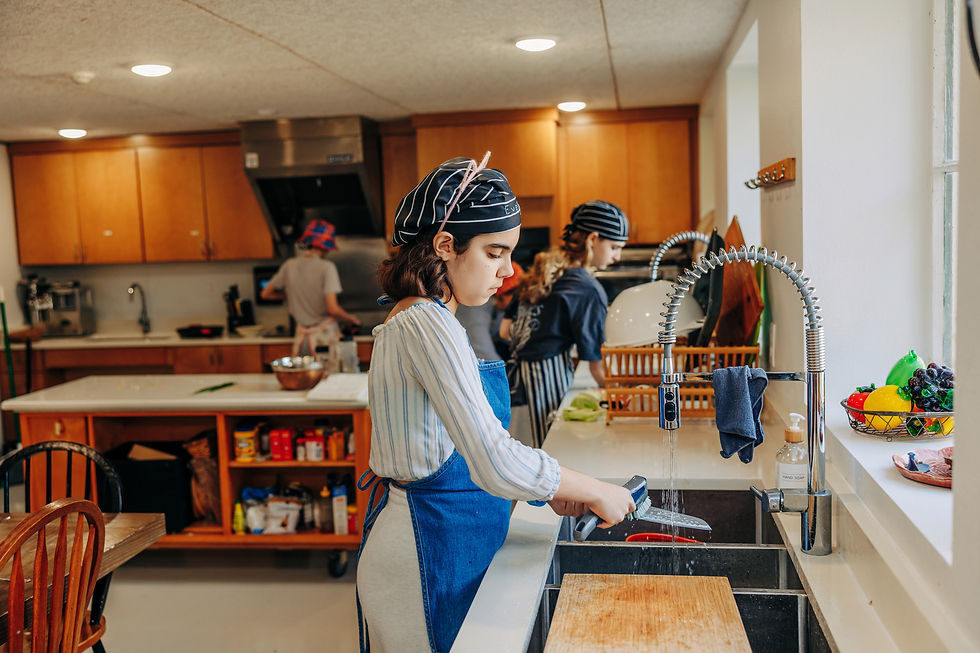
Students learn to organize long-term projects, manage their time, collaborate with classmates, communicate respectfully, and take ownership of their work.
With guidance from teachers, they experience increasing responsibility in an environment where mistakes are viewed as opportunities to learn and grow.
These experiences help students build confidence not because everything comes easily, but because they've learned they can overcome challenges.
Learning to Think, Not Just Memorize
Information has never been more accessible.
With a few taps on a phone, students can find answers to almost any factual question.
What matters today is knowing how to evaluate information, ask thoughtful questions, think critically, communicate clearly, and solve problems creatively.
These are the skills Montessori intentionally develops.
Rather than simply preparing students for the next test, we prepare them to navigate a rapidly changing world with curiosity, discernment, and confidence.
Discovering Purpose
Perhaps the most unique aspect of Montessori middle school is its focus on helping adolescents discover purpose.
Students are encouraged to explore their interests, contribute to their community, and engage in work that has real meaning.
Whether they're leading a service project, developing a business idea, creating art, conducting research, or working alongside classmates to solve authentic problems, students begin to see themselves as capable contributors—not just learners completing assignments.
That sense of purpose becomes a powerful motivator.
Preparing for High School—and Life
A common question parents ask is whether Montessori students are prepared for traditional high school.
The answer is yes.
Montessori students develop strong academic foundations while also building skills that help them thrive wherever they go:
Independent learning
Critical thinking
Effective communication
Time management
Leadership
Collaboration
Resilience
Confidence
These are qualities that high schools, colleges, employers, and communities increasingly value.
More Than an Education
Middle school is about far more than preparing students for ninth grade.
It's a time when young people are discovering their identity, developing their character, and learning how they can make a meaningful impact on the world.
At Mount Dora Montessori, we believe adolescents deserve an education that challenges their minds while honoring who they are becoming.
Our goal isn't simply to help students succeed in school. It's to help them become thoughtful, capable, compassionate young adults who are prepared for whatever path they choose next.
Because the middle school years aren't something to get through—they're an incredible opportunity to shape a lifetime of curiosity, confidence, and purpose.


Comments