What Does a Montessori Teacher ("Guide") Actually Do?

Spend a few minutes in a Montessori classroom, and you may notice something surprising.
The teacher isn't standing at the front of the room giving a lecture.
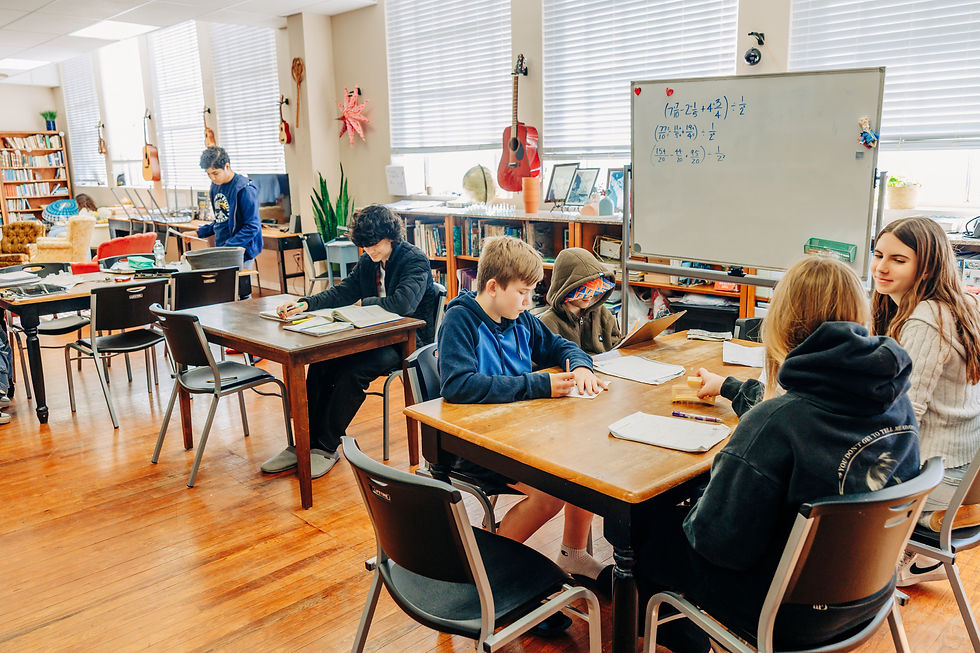
Children aren't all working on the same assignment.
In fact, it may look like the teacher is simply walking around the classroom, observing.
So what is the Montessori teacher actually doing?
Quite a lot.
In Montessori, teachers are called Guides because their role is fundamentally different from that of a traditional classroom teacher. Rather than directing every moment of the day, a Montessori Guide carefully prepares the environment, observes each child, and provides just the right amount of support to help every student grow into an independent learner.
It's a role that requires deep knowledge, careful observation, and incredible intentionality.
First, They Prepare the Environment
Maria Montessori famously said that the environment itself is a teacher.
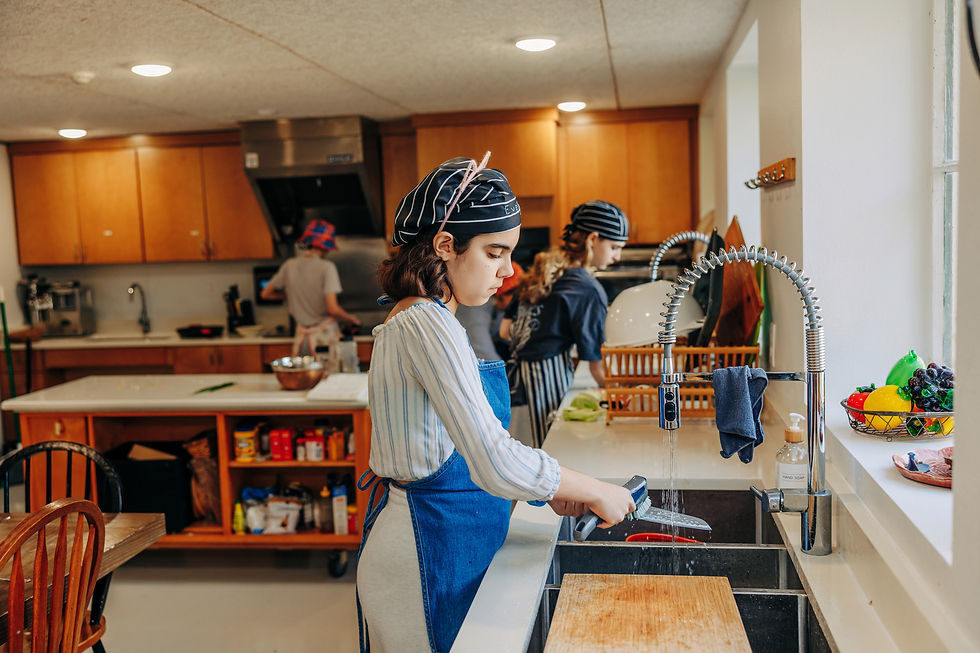
Every shelf, every material, and every space in a Montessori classroom is intentionally arranged to encourage independence, exploration, and concentration.
A Guide thoughtfully prepares that environment before children even arrive.
Materials are carefully organized from simple to complex. Everything has a purpose. Everything has a place. The classroom is designed so children can move confidently, make choices, and care for their surroundings independently.
A well-prepared classroom doesn't happen by accident—it reflects hours of thoughtful planning.
They Observe More Than They Talk
Observation is one of the most important tools a Montessori Guide has.
Rather than assuming what a child needs next, Guides watch carefully.
What captures this child's attention?
What concepts have they mastered?
Where are they becoming frustrated?
What are they ready to learn next?
These observations allow Guides to meet each child where they are instead of expecting every child to move through the same curriculum at the same pace.
It also means lessons are given at the moment they're most likely to be meaningful.
They Give Individual Lessons
In many classrooms, every student receives the same lesson at the same time.
Montessori works differently.
Throughout the day, Guides introduce lessons to individual children or small groups based on readiness rather than age alone.
One child may be exploring fractions while another is strengthening foundational math concepts. One student may be writing stories while another is building confidence with early reading.
Every child is moving forward—but not necessarily along the exact same path.
They Know When to Step In—and When to Step Back
Perhaps the hardest part of being a Montessori Guide is knowing when not to help.
It can be tempting to solve problems for children or complete tasks more quickly ourselves.
But every time we do something a child is capable of doing independently, we may unintentionally take away an opportunity for growth.
Instead, Montessori Guides ask:
"Can this child do this on their own?"
If the answer is yes, they often step back.
That doesn't mean children are left to struggle alone. It means they're given the space to think, try, make mistakes, and discover that they're capable.
Sometimes the greatest act of teaching is allowing a child to succeed without unnecessary help.
They Nurture the Whole Child
Montessori Guides aren't focused solely on academics.
They're helping children develop qualities that will serve them throughout life.
They model respectful communication.
They help children resolve conflicts peacefully.
They encourage responsibility, kindness, perseverance, and empathy.
They celebrate effort, curiosity, and growth—not simply correct answers.
Because education is about more than what children know. It's also about who they become.
They Build Relationships
A Montessori Guide often stays with the same group of children for multiple years.
That continuity creates something special.
Guides come to know each child's personality, interests, strengths, challenges, and learning style over time. Families build lasting relationships with teachers who truly know their children—not just as students, but as individuals.
That trust creates a strong foundation for learning.
They Are Always Learning, Too
Authentic Montessori Guides undergo specialized training that goes far beyond learning how to present lessons.
They study child development, observation, classroom management, the use of Montessori materials, and the philosophy behind every aspect of the method.
And the learning doesn't stop there.
The best Guides continue growing throughout their careers, reflecting on their practice, learning from their students, and continually refining how they support each child's development.
More Than a Teacher
At first glance, a Montessori Guide may appear to be doing less than a traditional teacher.
In reality, they're doing something remarkably complex.
They're observing, assessing, preparing, encouraging, redirecting, challenging, and supporting—often all within the span of a few minutes.
Their goal isn't to be the center of the classroom.
Their goal is to create a classroom where children become capable of learning, thinking, and growing with increasing independence.
At Mount Dora Montessori, our Guides see every child as capable, curious, and full of potential. Their role is not simply to teach lessons, but to cultivate an environment where children develop confidence, character, and a lifelong love of learning.
Because the greatest measure of a Montessori Guide isn't how much the teacher does—it's how much the children learn to do for themselves.

Comments