What Is Montessori? A Beginner's Guide for Curious Parents

If you've started looking at schools for your child, you've probably come across the word Montessori. But what exactly does it mean—and why do so many families choose it?
At its heart, Montessori is a philosophy of education built on a simple but powerful belief: children are naturally curious, capable, and eager to learn. Rather than asking, "How do we get children to learn?" Montessori asks, "How do we create an environment where learning happens naturally?"
That shift changes everything.
A Different Way of Thinking About Education
Traditional education often centers on the teacher delivering information to an entire class at the same pace.
Montessori takes a different approach.
Instead of expecting every child to learn the same lesson at the same time, Montessori recognizes that children develop at different rates and have unique interests. Carefully prepared classrooms, hands-on materials, and trained guides allow each child to progress at a pace that's both challenging and joyful.
The goal isn't simply to help children memorize information. It's to help them become independent thinkers who love learning.
Children Learn by Doing
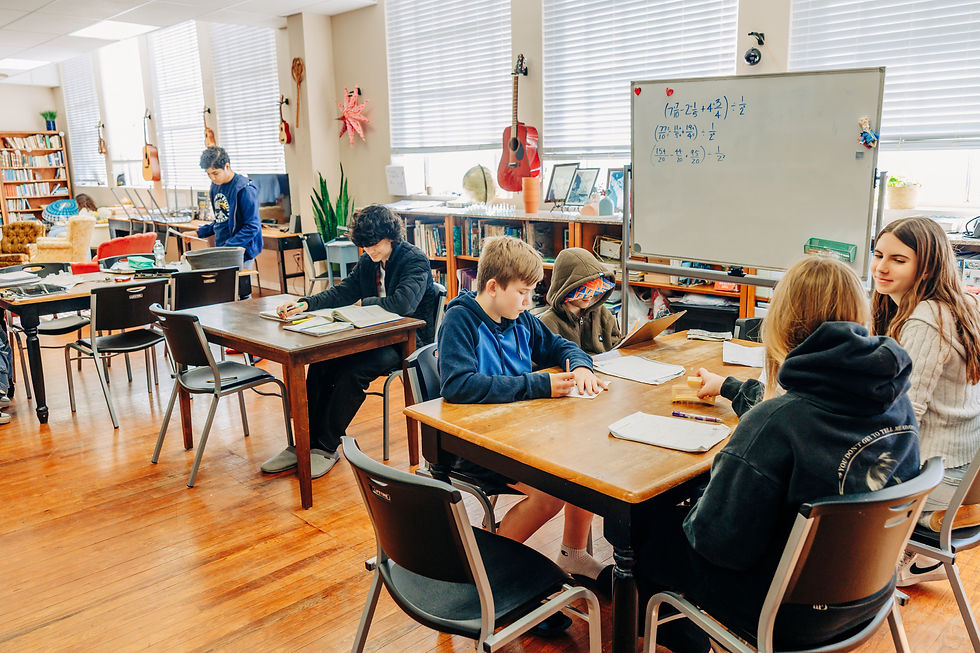
Walk into a Montessori classroom and you won't find rows of desks or children quietly completing identical worksheets.
Instead, you'll see children choosing purposeful work, exploring beautiful materials, solving problems, collaborating with classmates, and concentrating deeply.
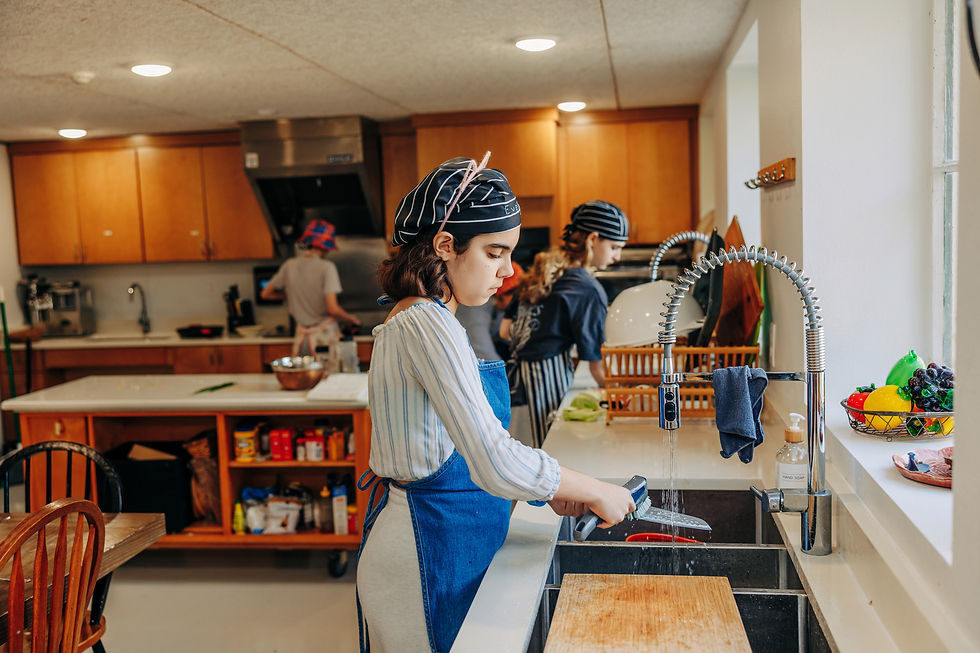
Young children might be pouring water, polishing a table, or tracing sandpaper letters. Older students may be conducting science experiments, writing stories, researching history, or working through complex math concepts using hands-on materials.
Every activity has a purpose. Through meaningful work, children build academic skills alongside confidence, coordination, concentration, and independence.
The Teacher Becomes a Guide
In Montessori, teachers are called guides.
Rather than standing at the front of the room directing every moment, guides carefully observe each child, introduce new lessons when they're ready, and provide support without taking over.
This approach encourages children to think independently, solve problems, and take ownership of their learning.
It also allows each child to receive individualized instruction based on where they are—not where a curriculum says they should be.
Why Are Montessori Classrooms Mixed Ages?
One of the first things many parents notice is that Montessori classrooms typically span three years.
For example:
Infant Community: 3–15 months
Toddler Community: 15 months–3 years
Primary: 3–6 years
Elementary: 6–12 years
Middle School: 12–15 years
This isn't accidental—it's intentional.
Younger children naturally learn by observing older classmates, while older students reinforce their own understanding by mentoring younger ones. Over time, every child experiences being both the learner and the leader, building confidence, empathy, and a strong sense of community.
Independence Is the Goal
Montessori classrooms are designed to help children do things for themselves.
Whether it's hanging up a backpack, preparing a snack, choosing work, resolving conflicts, or managing a long-term project, children are given opportunities to practice real responsibility every day.
While this may take more patience at first, it leads to something much more valuable: capable, confident children who believe, "I can do this."
Montessori Is About More Than Academics
Academic excellence is certainly important, but Montessori education reaches beyond reading, writing, and math.
Children also develop:
Confidence
Independence
Curiosity
Concentration
Creativity
Critical thinking
Respect for others
A lifelong love of learning
These qualities help children succeed not only in school, but throughout their lives.
Is Montessori Right for Every Child?
Every child is unique, but Montessori can benefit many different personalities and learning styles.
Children who are naturally curious often flourish in an environment where exploration is encouraged. Children who need extra time to master concepts appreciate being able to progress without unnecessary pressure. Those who are ready to move ahead can do so without waiting for the rest of the class.
Rather than expecting children to fit the classroom, Montessori seeks to prepare the classroom for the child.
A Foundation for Life
Dr. Maria Montessori believed that education should prepare children not just for the next grade, but for life itself.
That philosophy continues to guide authentic Montessori schools today.
At Mount Dora Montessori, we see children as capable, curious individuals with tremendous potential. Our role is not simply to teach them facts, but to nurture independence, character, and a lifelong love of learning in a community where every child is known and valued.
Because the ultimate goal of education isn't simply what children know—it's who they become.

Comments