7 Ways to Bring Montessori Into Your Home

You don't need a perfectly organized playroom, expensive wooden toys, or shelves full of Montessori materials to bring Montessori into your home.
In fact, some of the most powerful Montessori principles don't require buying anything at all.
At its heart, Montessori is about how we see children: as capable people who are learning how to navigate the world. At home, that means creating opportunities for children to participate in family life, make appropriate choices, solve problems, and gradually do more for themselves.
Here are seven simple ways to bring that philosophy home.
1. Make Your Home Accessible to Your Child
Imagine living in a house where almost everything you need is several feet above your head.
That's essentially what the adult world feels like to a young child.
One of the simplest ways to encourage independence is to make everyday things accessible.
That might mean putting cups and bowls on a low shelf, adding a stool near the sink, placing a small basket where shoes belong, or hanging a hook at your child's height for their backpack.
The goal isn't to redesign your entire house. Look for small opportunities that allow your child to think, "I can do this myself."
2. Let Them Help With Real Work
Children don't always need more activities. Often, they simply want to participate in what we're already doing.
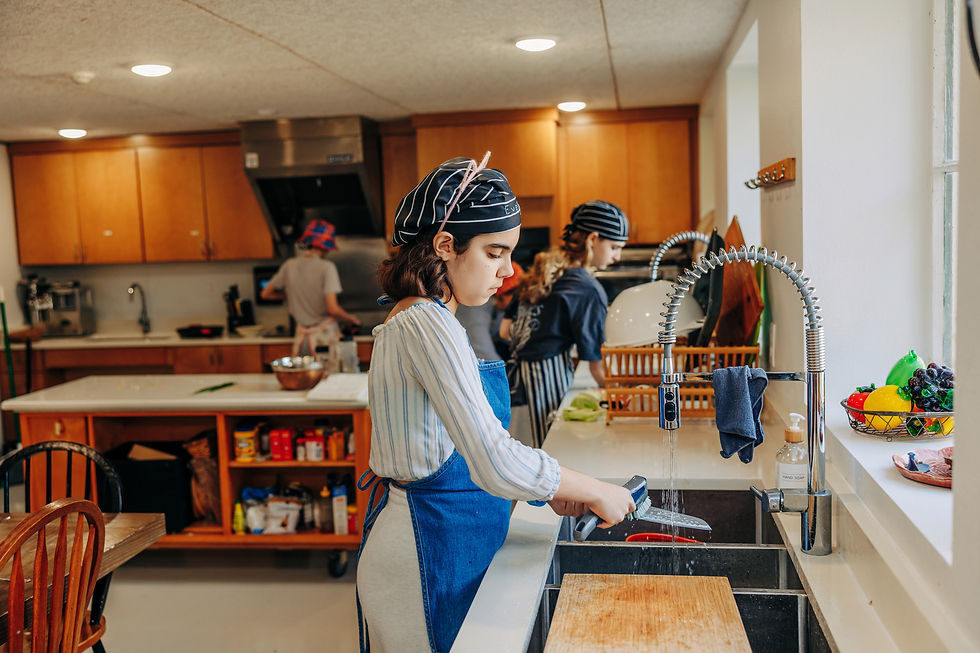
Invite your child to wash vegetables, fold towels, water plants, feed a pet, sweep the floor, set the table, or help prepare dinner.
Will it take longer?
Almost certainly.
Will the towel be folded perfectly? Probably not.
But the goal isn't efficiency. Your child is developing coordination, concentration, responsibility, confidence, and a sense that they are a contributing member of the family.
Real work has real meaning—and children know the difference.
3. Give Fewer Choices, Not Unlimited Choices
Montessori values freedom, but Montessori freedom always exists within boundaries.
Instead of asking a young child, "What do you want to wear today?" while staring at an entire closet, try:
"Would you like the blue shirt or the green shirt?"
Instead of asking, "What do you want for breakfast?" offer two reasonable options.
Both choices are acceptable to the adult, but the child gets genuine ownership over the decision.
As children grow, the range of choices can grow with them.
This is one of the central ideas of Montessori: freedom within limits.
4. Resist the Urge to Do Everything for Them
This may be the hardest one.
Adults are incredibly efficient. We can put on shoes, zip jackets, clean spills, open containers, and solve problems much faster than children can.
But faster isn't always better.
When it's safe and practical, give your child time to try.
If they're struggling with a zipper, wait a moment before stepping in. If they spill water, show them where the towel is instead of immediately cleaning it yourself. If they can't figure out how something works, resist giving them the answer right away.
You can offer help without taking over.
The extra few minutes it takes today are an investment in the capable child you'll see tomorrow.
5. Create a Place for Everything
Montessori environments are intentionally orderly—not because we expect children to be perfectly tidy, but because order helps children develop independence.
When children know where something belongs, they're much more capable of caring for it themselves.
You don't need an Instagram-worthy Montessori playroom.
A few simple baskets, clearly defined spaces, and accessible shelves can make an enormous difference. Instead of a giant toy bin filled with dozens of things, consider displaying fewer choices and rotating them periodically.
And when something is finished?
"Let's put it back where it belongs so it's ready for next time."
Over time, caring for the environment becomes part of the child's routine rather than something an adult constantly has to demand.
6. Let Mistakes Be Part of Learning
A child pours too much milk.
A block tower falls.
A teenager forgets something they were responsible for.
Our instinct is often to immediately fix the problem—or prevent it from happening in the first place.
Montessori asks us to leave room for appropriate mistakes.
Natural consequences are powerful teachers. A spill teaches control. A forgotten responsibility teaches planning. A project that doesn't work teaches persistence and problem-solving.
That doesn't mean we let children fail when the consequences are dangerous or overwhelming. It means we don't eliminate every manageable struggle from their lives.
Children develop confidence not by never experiencing difficulty, but by discovering that they can work through it.
7. Slow Down
Perhaps the most Montessori thing you can do at home is also the simplest:
Give your child time.
Time to put on their own shoes.
Time to answer a question.
Time to struggle with something.
Time to notice a bug on the sidewalk when you're trying to get to the car.
Time to become deeply absorbed in an activity without immediately being hurried to the next one.
Children operate on a different timeline than adults. When we're constantly rushing them, correcting them, or interrupting them, we can unintentionally take away opportunities for concentration and discovery.
Whenever possible, leave a little more space.
Watch.
Wait.
You might be surprised by what your child can do.
Montessori at Home Isn't About Perfection
Bringing Montessori into your home doesn't mean turning your living room into a classroom.
It doesn't mean buying special materials or doing everything exactly the way your child's Guide does at school.
And it definitely doesn't mean having perfectly independent children who cheerfully clean up after themselves every single time.
It's a mindset.
Ask yourself:
"Am I doing something for my child that they could begin learning to do for themselves?"
"Can I give them a meaningful choice here?"
"Can they participate instead of simply watching?"
"Can I give them a little more time before I step in?"
Those small decisions add up.
At Mount Dora Montessori, we believe children become confident and independent by having opportunities to practice confidence and independence every day.
And some of the most important opportunities don't happen at school at all.
They happen while making breakfast, feeding the dog, folding laundry, getting dressed, cleaning up a spill, and participating in the everyday work of family life.
Because Montessori isn't just a way of learning.
It's a way of growing.


Comments